Bedtime Noir 2: Valentine's Edition
Tonight, a short selection from Cracker, the next book in my neo-noir Eucalyptus Lane series from Outcast Press. And, meet Mitzi!
Tonight, a short selection from Cracker, the next book in my neo-noir Eucalyptus Lane series from Outcast Press. And, meet Mitzi!

Babylon, the new film about old Hollywood and the transition from silents to sound, is a visual and narrative feast with some scenes so over the top they’re hard to believe. My first impression was that it was really good, and I was glad I saw it, but in the days afterward I found parts of it still detonating in my brain. Babylon is full of revelations about the nature of technology and its human impact, and the power of innovation, as well as ambition and dashed expectations.
Written and directed by Damien Chazelle, the film mainly follows the trajectory of Emanuel “Manny” Torres (Diego Calva), a young man who finds himself finally in the right place at the right time to carve out a niche for himself in the burgeoning moving picture business as assistant to star Jack Conrad (Brad Pitt) and then as a motion picture executive at Kinograph Pictures. Manny’s rise parallels that of Nellie LeRoy (Margot Robbie), an unknown yet self-proclaimed “star,” whose confidence and panache carry her from the gritty stages of low-budget one-reelers to film stardom in a dizzyingly short time.
As Manny’s and Nellie’s fortunes increase, Jack’s are on the wane. His success as a silent film star does not translate to sound. Far from being stuck in the past, Jack is keen to see where advances such as talking pictures will take the new industry that up until now has been most kind to him. At a time when movies were seen by some East Coast intellectuals as bastard children of the theatre, he argues passionately and eloquently with his wife--another soon-to-be-ex and recent New York thespian--for film as the true art of the masses, a magical force in the lives of everyday hard-working Americans.
The hot lights of Hollywood shimmer brightly for some but burn others in the rarified circle of individuals making a name for themselves in the new center of the universe rising from dusty orange groves. Sidney Palmer (Jovan Adepo), a black jazz musician and soon-to-be movie star, finds the price of success too high when he realizes the compromises he’ll have to make to remain in his palatial mansion. Lady Fay Zhu (Li Jun Li), is magnetic as a stylish chanteuse and fearless woman whose (lesbian) relationship with Nellie has to end if they’re both to continue their careers in this world where anything goes behind the scenes, but where exposure in the press spells doom in a country still entangled in the Puritanical values of the past and the opening shots of culture wars that continue to this day.
While connections to the biblical Babylon are apt, so are connections to Kenneth Anger’s cult book Hollywood Babylon, a collection of black and white photographs and texts chronicling the decadent lifestyles and dramatic deaths of cinematic luminaries from the silent age to more modern times. The panic, passions and addictions chronicled in that famous tome parallel the ups and downs of the personae portrayed in Babylon.
Beautifully shot, well-cast and well-acted, this film has a frenetic pace that reflects the seat-of-your-pants race to get to set after a hard night of partying, get the replacement camera at all costs, get the shot, get the money, get the drugs, to get everything you can while in the spotlight, because fame is fickle, funds get depleted and while stars remain in the pavement outside Mann’s Chinese Theatre, they often burn out in real life. The best one can hope for is to be a part of something bigger than oneself, and realizing that in Hollywood is the beginning of a kind of cold, hard wisdom, as explained to Jack by gossip columnist Elinor St. John (Jean Smart).
Granted, this film won’t be suited to all tastes, and is unsparing in its depiction of all-out early Hollywood wildness (the good, the bad, and the weird) but if you’re interested in the pioneer days of film, the silent era and early talkies (as am I), you will likely find much to enjoy in this spectacular epic. It takes the viewer to some dark places, but in the dark is where the magic of movies resides.
See it on the big screen while you can. There’s a special magic in that as well.

“It’s the end of the world as we know it, and I feel fine.” --R.E.M.
Ever since I was a child, I’ve had the sense of being caught between two generations, like the gears of a clock. The youngest in an older crowd, I grew up in a small Georgia town that was suspended in a kind of time warp, and as I got older, my appreciation for the antique, retro and vintage increased. I remember summers spent at my great-aunt’s house in Macon, drawing, reading YA novels and flipping through volumes of This Fabulous Century, the Time-Life set of books that provided a photographic chronicle of each decade of the Twentieth Century. While I liked the 1920’s with its pictures of flappers, dead gangsters and deco magazine covers, the volumes I returned to most frequently were the 1940’s through 1960’s. Why?
Of course there were major historical events unfolding, and those iconic Life Magazine photos of key moments, but maybe it was the look of everyday life as well. Something about the interior décor of those years as it evolved from solid earthbound into space-age futuristic. The cars, streamlined and elegant, even with the flambouyant fins of the 1950’s. Black & white TV shows, movies and advertising showed a world as yet uncluttered by plastic bottles, styrofoam and the other detritus of disposable everything. Everyday objects like telephones, ashtrays, coffee pots, cups & saucers, took up more space, had weight & depth. People dressed up to travel, go to town, and clean the house. I was fascinated by the youth culture & style of the years that gave birth to the Beats, Charlie Parker, rock & roll, Elvis, and Janis Joplin. Guys in t-shirts and jeans, smoking cigarettes, riding in cars, girls in Bobby socks, the diners, the popular cartoons (Bill Mauldin’s Army, They’ll Do It Every Time), and the comedians: Jack Benny, Shelley Be9rman, Lenny Bruce. Mid-twentieth century was also the time of an unprecedented and profound worldwide shift.
In the 1950’s, shows like The Twilight Zone revealed the fears and anxieties of the first generation living in the shadow of the atomic bomb through brilliant short narratives, and even through set design. Among the sleek, modern lines of furniture, appliances and cars, are visual cues that reflect an awareness of humanity’s ability to toy with its collective mortality. In the “Third From the Sun” episode, where a middle class family grapples with the imminent threat of annihilation (and yes, there’s a twist), odd, misshapen objects d’art are seen in the background and foreground: figurines of animals and people, part representative, part abstract: art intended to unsettle.
Today, the hot nuclear threat that had waned into Cold War rhetoric waxes again, and like mid-twentieth century’s increasing fascination with plastic and “better living through chemistry,” more widespread technology and faster production (with fewer workers) isn’t advancing the cause of humanity. A world at tipping point on several fronts such as higher temperatures (ie "scorchers"), melting icecaps and mass extinctions, doesn’t require a nuclear war to destroy it; we’re doing a fine job of that on our own, thank you very much. It’s the logical outcome of a “disposable” society where, in the eyes of the powers that be, goods, people and animals are, as ex- newsman-turned-“mad prophet” of the airwaves, Howard Beale, claims in Network (1976), “alike as bottles of beer, and as replaceable as piston rods.”
While some world leaders wreak bloody havoc, and others wring their hands in a state of dithering incompetence, “preppers,” have written off earth's future altogether, building rockets to launch themselves into space. The Brave New World only belongs to those who can afford it, whether it’s a space ship to Mars, or plane to a posh resort that still has clean air & water, and maybe a drive-through zoo called “Last Chance to See!” housing the last of members of over a thousand animal species.
And what about the rest of us? Instead of popping milltowns, we doom scroll on social media, slipping into a solipsistic stupor, numb out on the ‘Net (the lack of which will drive many of us mad when the grid goes dark), and binge-watch TV. Not you, you say? Excellent! Then what are you doing? If you're somehow trying to make the world better, ignoring the wags who mutter about rearranging deck furniture on the Titanic, more power to you. We must arrange these deck chairs (words, notes or brush strokes, etc.) just so, if for no other reason than that somewhere in the universe there's a snapshot for the ages, and somehow, someone or something will know we were doing our best when the doomsday clock hit midnight, or high noon, whichever the case may be. That energy out there in the collective unconsciousness is seeking expression through your work. You have a duty to fulfill.
Creating art is an act of faith in the face of disaster. Again, as seen in The Twilight Zone episode, "The Midnight Sun," Norma (Lois Nettleton) continually paints the sun over the city as an earth thrown off its normal orbit hurtles toward the ever-expanding orb, slowly increasing the temperature to the point of driving the only neighbor she has left (and the radio announcer who broadcasts grim daily reports) to a nervous breakdown and eventual heat stroke and Norna herself to the edge of sanity. The only thing holding her back from the brink is her art.
In a recent re-watching of Stanley Kubrick’s 1964 film, Dr. Strangelove: Or How I Learned to Stop Worrying and Love the Bomb, it occurred to me that today a more apt subtitle might be “How I Learned to Stop Worrying and Watch It Burn.” While the world’s richest escape the pull of earth's gravity, the rest of us sit astride a falling bomb with Major T.J. Kong, played by Slim Pickens, whose no-holds barred cowboy swagger, all-American can-do attitude and yes, earnestness, are weirdly refreshing after the semen-obsessed macho posturing and whacko military theories being bandied about in the War Room. (Click here to see the Pickens’ bomb-ride clip—with a young James Earl Jones as the pilot!)
In my bomb-riding fantasy, Kong smells of sweat and delirious enthusiasm as I grip tighter around his chest, holding on for dear life as he fearlessly whoops and hollers (like the former rodeo star Pickens himself was), waving his hat in a state of sheer exhilaration as ground zero rushes to meet us. True, riding a bomb while holding on for dear life is a paradox, but so is the fact that in a post-post-modern world where possibilities are endless, we drag our feet when it comes to our own self-preservation and the very survival of earth itself. Can’t something be done to save us? Yes, but focus and a sense of urgency are required, and again (here in America), hand wringing & dithering incompetence too often come into play, along with denial and endless debate over facts already in evidence.
In Dr. Strangelove, mass murder on a global scale is discussed by the numbers in the exquisitely designed War Room, and so today are various forms of negligent homicide, whether in the board room, private dining room, or anywhere else the world’s richest and most powerful gather to decide the fate of the future. For all our mid-century space-age futuristic ambitions, we're instead experiencing the reactionary vibe of Baron von Metternich, which for most of us is not a good thing. Fear and greed are the two most destructive forces in the world, but even as they run rampant, it helps to remember that from a Marx-ist perspective (Brothers, that is), there’s subversive power in comedy, and in laughter, a certain kind of hope.
Before I slip into the silvery shadows of my beloved black & white TV shows (Perry Mason, et al), and the dark corners of noir films where fate crouches, waiting to grab the next unsuspecting sucker by the ankle, I would ask you to consider Kierkegaard’s advice: "The only intelligent tactical response to life's horror is to laugh defiantly at it."
For those with their hands on the levers of power, the world by the purse strings, and egos bigger than Jupiter, the only fate worse than death is to be mocked. Laughter, like the sublime yawp of the rodeo star, like Molly Bloom's final "yes," is a ray of sun slicing through hopeless gloom.
The court jesters were unafraid to speak truth to power, to tell the King what he didn't want to hear and laugh while doing it. Truth-telling is a risky business that can get one fired, divorced, executed, assassinated, etc., but one we need desperately if this century we're in now has any shot at being "fabulous." Will it get its own set of Time-Life books?
Possibly. If we can hold it together long enough.

When I first heard there was a new Elvis movie arriving this summer, I thought, “Yeah, I’ll have to see that sometime,” but when I heard that Baz Luhrmann directed it, I thought, “Oh, hell, yes; I must see that, and on the big screen!” I’m a longtime fan of Elvis, grew up listening to his music, and saw the man himself in concert when I was around 9 years old. I went with my mother, grandmother, great aunt, and cousin, and I saw the line of people, women, mostly, bringing those giant stuffed animals up to the stage in tribute, witnessed Elvis wiping the sweat from his brow, with a new handkerchief, or scarf, of a different color each time, and tossing each one off the stage to some lucky member of the clamoring crowd who no doubt treated it as an heirloom, if not a relic to be passed down to the next generation with the reverence accorded such a persona, such a presence, such a star, as Elvis was and still is.
If referring to a concert souvenir as a relic seems a bit over-the-top, imbuing Elvis with a certain religiosity not normally appropriate for an entertainer, even the caliber of Elvis, consider the argument that sociologist and editor of the Encyclopedia of Southern Culture, Charles Regan Wilson posits in his book Judgement and Grace in Dixie, that there are three pillars of civil religion in the south: entities not religious in and of themselves, but treated with a reverence usually associated with religion, and those are (1.) beauty pageants, not necessarily of the glitzy, Miss Universe-Trumpian variety, but of wholesome young Southern womanhood, and all the attributes, real or mythologized, that go along with that, (2.) Alabama football coach Bear Bryant (and by extension college football itself, especially that of the SEC variety), and (3.) Elvis Aaron Presley. Do you have to be from the south to hold these things in high regard, or at least to understand why this part of the country does? No, but it helps. Elvis, however, has long transcended his Southern origins and, like Coca-Cola, that other ubiquitous block-buster export invented in the lower right-hand corner of the United States, gone on to conquer the world.
Australian director Baz Luhrmann burst onto the cinematic scene with Strictly Ballroom in 1992 and has since become known for such kaleidoscopic eye candy as Moulin Rouge and The Great Gatsby, among others. The moods and visuals of his films produce the sensation of a roller coaster ride, with the camera’s dips, swings, close-ups, panoramic spectacle, and fancy-footwork editing, operatic in emotional intensity yet street-level intimate at the same time: a melding of cinematic art and pop culture in a way that has become Luhrmann’s signature style. In Elvis, he captures the familiar and the iconic as well as the small, backstage moments that we never actually saw but knew were there, from classic Elvis (played by Austin Butler) shaking it in a pink suit, to Army Elvis getting to know Priscilla (Olivia deJonge), to lonely Elvis, lamenting his age and the thought that he might not be remembered for anything important.
Looming above all this is the formidable, mercurial persona of Colonel Tom Parker, played by Tom Hanks in a rare, somewhat villainous role. I say “somewhat,” because as the Colonel (he isn’t really a colonel, nor an American), Hanks as Parker projects a grandfatherly malevolence, which sounds like an oxymoron, and yet he does it. He has the vision of what Elvis can become, but undercuts his protegee at crucial moments, lighting the rocket that will skyrocket E. to fame but dousing the spark when his own self-interests get in the way. When Elvis has the opportunity revitalize his flailing career by going worldwide with his act and newfound sense of purpose and identity, Parker goes behind his back and gets him shackled to a contract with the International Hotel, for an interminable Las Vegas residency that thwarts Elvis’s ambitions and erases Parker’s considerable gambling debts at the same time. In his bid for self-preservation, Parker destroys Elvis’s trust in him, their long-time relationship and Elvis’s independence in one fell swoop. The frame for the entire film is Parker’s telling of the story from his point-of-view, in a voice that sounds like grandpa telling the kids gathered ‘round a tale of joy and woe, of a great “snowman” melted by the incandescent glow of his own greed.
According to the film, Elvis went into this relationship with his eyes wide open, aware of Parker’s ability to snow others, but also aware that he needed (or thought he needed) a vision like Parker’s to break out of the carnival and rinky-dink nightclub circuit to become an international star. Parker was already a manager for country acts like Hank Snow (David Wenham), who rapidly sinks to the bottom of the bill once Elvis joins the act. Snow voices the sentiments of religious conservatives when after one particularly raucous concert where Elvis shakes the crowd into a frenzy and a pair of women’s undies fly onto the stage, he informs Parker that he’ll spend the rest of the evening in prayer, to which Parker, already looking far ahead to the next real big thing, responds “Yeah, you do that, Hank.”
One person who is suspicious of Parker from the get-go is Elvis’s mother, Gladys, beautifully played by Helen Thompson. Her love for her son is palpable, soulful eyes welling with tears when Elvis leaves and goes off to meet his destiny alongside this man who even with his gift of sincere-sounding gab, seems to her something of a pretender. Yes, she’s grateful for Elvis’s subsequent early success and like everyone in E.’s circle, enjoys the trappings of it that include Graceland. This is not the late, sainted Gladys of lore, but a woman who worries, drinks, frets, criticizes and most of all, adores her son to the ends of the earth. Her death is a turning point for Elvis and, left with only his weak-willed father Vernon (Richard Roxburgh) to look out for him, he feels her loss profoundly for the rest of his life.
While I enjoyed this movie tremendously, the deep-dive into Elvis-inspired euphoria experienced at the beginning was, like any great high, hard to sustain for long, and the second half feels more conventionally biopic than Elvis-fever-dream. That said, the necessary biopic elements are handled well, and the Parker-centric narration serves as a compelling connecting thread throughout. I’ve noticed some comment that childhood Elvis’s visit to a black church tent revival and a black nightclub happened too close together in the film, and that such events likely never took place at all in real life. These comments weren’t disputing the influence of religion, black culture, and rhythm & blues music on the boy who would be Elvis (boyhood Elvis played by Chaydon Jay), just that it probably didn’t happen quite like it’s depicted in the film, some say. Whether it did or didn’t, this film is certainly no documentary, and the visual representation of those events and influences work very well in establishing the cultural, racial and musical milieu that made Elvis the artist and performer that he was. It’s easy to see why Elvis flees to Beale Street’s Club Handy when the stress at Graceland gets too hard to handle. The performers at Club Handy inspire him and the music is salve for his soul. When Elvis expresses concern about the direction Col. Parker wants his burgeoning career to take, it’s here that his friend B.B. King (Kelvin Harrison, Jr.) makes an observation that echoes throughout the rest of the film, that Parker must have some other reason than Elvis suspects, some reason all Parker’s own. Indeed.
While Austin Butler does an excellent job in this film, when the real Elvis shows up in footage near the end of the picture, we’re reminded of his greatness as a performer. Even in his final years, when weight gain, drugs, and all his other problems were the stuff of legend and tabloid fodder, the light comes through in his eyes, his smile, his voice, and it’s easy to see why he’s remembered, and why he is the one and only Elvis. Much of this story has been told before, but Baz Luhrmann succeeds in bringing the story of one of the 20th century’s greatest musical artists and cultural icons to a brand-new generation, while giving longtime Elvis fans exactly what they want to see. As the real-life subject for a Luhrmann film, Elvis is the perfect choice.

Anxious Nothings, Volume 1 (Anxiety Press) is a collection of short fiction, non-fiction, poems about sex, and, as the title suggests, the attendant anxiety often surrounding it in all its forms. The introduction by editor and publisher Cody Sexton, places the collection into context with an explanation of what inspired this volume, involving a teen’s discovery of Hustler Magazine, among other things. It’s dedicated to Larry Flynt and porn impresario Al Goldstein, and while the works collected here are wide ranging in tone and topic, the intro makes for a center the way a metal framework within a clay sculpture holds it all together.
Before I read this book, I’d stumbled onto The People Vs. Larry Flynt on cable, the scene where Larry (played by Woody Harrelson) returns to the offices of Flynt Publications for the first time following his shooting. He wheels into his office, much to the chagrin of the suits looking to tone things down, and instructs the receptionist to announce on the loudspeaker, “The pervert is in the building.” This book seems to suggest the pervert is indeed in the building, and to paraphrase Walt Kelly’s comic possum, Pogo, “We have met the pervert, and he is us.”
If sexuality is an integral part of being human, and if it really does take all kinds to make the world go around, every one of us could be considered perverts to some degree, seen through the lenses (or technological keyholes) of the censorious forces present in society, especially in the U.S., which has a much more puritanical culture than the land of “freedom and liberty” is usually willing to admit.
Depending on one’s personality and mindset, these works may prompt laughter, (Grayson Lagrange’s “Feeding the Ducks” and Jason Gerrish’s “Slaw”), a sense of horror or dread (Paula Deckard’s “Girl’s End”), disgust (Sebastian Vice’s “Ass Eating”), and even pity tempered with cool satisfaction that the bad guys/chicks in the story got what was coming to them (Paige Johnson’s “Ruffled Feathers” and Kristin Garth’s “Jungle Rules”). Snacking on this collection of literate pornographic bon-bons is a liberating experience in many ways, acknowledging the pervert within one’s own psyche, and meeting it with a high five of recognition thus subverting any authority threatened by the anarchic freedom of thinking for oneself, reading what one pleases, and engaging in life, liberty and the pursuit of pleasure between two—or more—consenting adults.
The transgressive behavior found in Anxious Nothings is unfiltered and unadulterated save what judgements the reader brings to it, which gives each piece in the collection certain qualities of a Rorschach test administered in a quiet corner at a wild party. No therapist here, though, only the intermittent palate-clearing snippets of sage words by the likes of the Marquis de Sade, Karl Marx, Mark Twain, and Gertrude Stein, with text graphics for these made to look like cut-out ransom notes, heightening the illicit nature of the content and grounding it within the wisdom that there is nothing that threatens you from between these covers, only modern stories, poems and essays about age-old cornerstones of human nature. The characters herein may be anxious, but you, dear reader, need not be. You are in good hands. You are human. Fear not.
However.
Right before I wrapped up this review, I was flipping through channels and again stumbled upon The People Vs. Larry Flynt. This time, it was near the ending, where Larry wants to take his case against Jerry Falwell to the U.S. Supreme Court. Larry’s lawyer, Alan Isaacson (played by Edward Norton), resists, afraid that Larry will make a mockery out of an appearance in front of such of an august institution, but Isaacson finally acquiesces, and prevails. In light of recent rulings, I have to wonder what the future now holds for free speech in America, and for other freedoms most have long taken for granted.
President Franklin D. Roosevelt famously said that we have “nothing to fear, but fear itself,” yet now more than ever we seem to be a nation in the grip of fear and loathing. Writing hobbled by fear, tempered by prevailing opinion about what is “acceptable” makes for a lukewarm experience through which nothing is learned, gained, no fun is had, and time is wasted. This one is worth the time, whether as a left-handed bon-bon of ballsy entertainment or thought-provoking starting point for a conversation with yourself about why something makes you feel the way it does. This is a strange, bold book for even stranger times, a post-modern Whitman’s Sampler of fearless writing. It is a literary anthology that contains unapologetic, unvarnished, explicit sexual content. You may love it, or you may be offended, but if books like this get banned, you’ll never know.
Be bold. Be fearless and support others who are.
Freedom depends on it.

It’s been a while since I’ve written a review and this is the first of many I'm about to share. I’ve been undergoing my own personal transformation for the past couple of years and this is the perfect book with which to resume my literary musings. In Filth It Shall Be Found, the first volume of transgressive fiction from Outcast Press (ed. Paige Johnson) is a carnivalesque tour of the of the human spirit's darker side, and in keeping with its Jungian title, invites readers along on a Bahktinian journey through the netherworld of consciousness where the “It” of the title is discovered.
Russian philosopher and theorist Mikhail Bahktin identified and described 4 hallmarks of the carnivalesque world view that can be found in literature, and these pinged around in my mind immediately after I’d finished the book . While this isn’t meant to be an academic analysis or anything other than my own experience reading Filth, the fact that the ping was loud and persistent shows there is order in chaos, sanity in madness, and that this collection exemplifies the transformative power of transgressive fiction.
Using Bahktin's hallmarks of the carnivalesque as guideposts on this tour, the first, “familiar and free interaction between people where barriers are broken,” is the crux of Don Logan’s “Isaac and Me,” where the worlds of a homeless man and a mysterious “kid” collide then separate leaving one of them indelibly marked by betrayal. CT Marie's “Sugarbaby” is a train wreck that begins on a subway and ends in an unexpected place (for this reader anyway). In both of these stories, the urban setting heightens the “random” precision of chance encounters, Hitchcockian intersections where fate lurks behind the scenes, then steps out and knees you in the groin when you least expect it.
The next hallmark is “eccentric behavior,” where society’s norms are broken and/or blithely ignored without consequences. Simon Broder's“Dollhouse" flows in this vein, exposing the lie that grown-ups are wiser than kids, featuring an immature narrator with a most distinctive voice. Another example of eccentric behavior stretched to extremes is Emily Woe's “The Secret Smile,” where the narrator's utter blindness to the consequences of his own actions is nothing short of remarkable.
The hallmark of “carnivalistic” mesalliances” where those normally separated unite, is personified in Paige Johnson's “The Blue Hour.” Set in a strip club where lines are both crossed and laid out on a table, the roles of performer and spectator are blurred as forbidden familiarity portends a special kind of friendship, doom, or both. Another case of forbidden familiarity is examined in G.C. McKay ‘s “Je Ne Sais Quoi,” in a father's tortured observations of his daughter's odd behavior.
The final hallmark of the carnivalesque world view, “profanation,” is on full-frontal display with “The Fire Inside,” by Sebastian Vice, where anarchic take-down of all that is “holy” debases and grinds guardians of corrupt power into the ground. Profanation of the human body, specifically the female body, occurs in Amanda Cecelia Lang's “Daisy in the Dirt,” its dark magical realism sparkling with a crystal-clear awareness gained in the presence of death.
The book’s cover art features a woman removing a mask, an appropriate image to represent this volume. Perhaps I have a particular affinity for the notion of the carnivalesque and what it represents, having lived in New Orleans for nearly twenty years. There, Carnival season is a time when normal rules don’t apply: everyday routes are altered, appetites indulged, and appearances don’t represent reality. Bourbon Street swells into a bacchanalian mass of humanity in all its wonder and debauchery. The success of each Mardi Gras is measured by the amount of trash collected on Ash Wednesday, but for weeks and even months afterward, one finds glitter in the gutters, and beads hanging from the trees. Such is the effect of feasting on the stories herein and coming to the last page: the show is over, parade passed, but the details linger and haunt.
Each of the twenty stories in this anthology makes its unique contribution to the transgressive gestalt of In Filth It Shall Be Found. I look forward to seeing more from all these writers in the future, and more anthologies from Outcast Press.
Laissez le bon temps rouler!

Once you lock the door
It’s your space to do whatever
But you don’t want to
Move around too much
If it gets cold and
You keep it cool
Because the alternative is unpleasant
in a small room
Shared by countless other ghosts
Who’ve passed through this space
Slept in this bed
Showered in this tub
Looked in this mirror
And the bed covers are supplemented
By tomorrow's clothing
and felt blankets from the car
Providing a refuge
An island or a raft
From which to seek
The horizon
-NMc

You discover more about yourself through staying at a series of cheap motels for several weeks than you ever would spending a month at a luxury resort. Why? I don’t know. Maybe it puts one in touch with one’s basic needs rather than catering to every want.
There are some characters on TV and in movies that I’m thrilled to see whenever they appear. Not the stars, mind you, though I've nothing against star power, per se. As Peter Bogdonavich once said (and I’m paraphrasing) it’s the reverberations emanating from stars that draw us into their orbit.
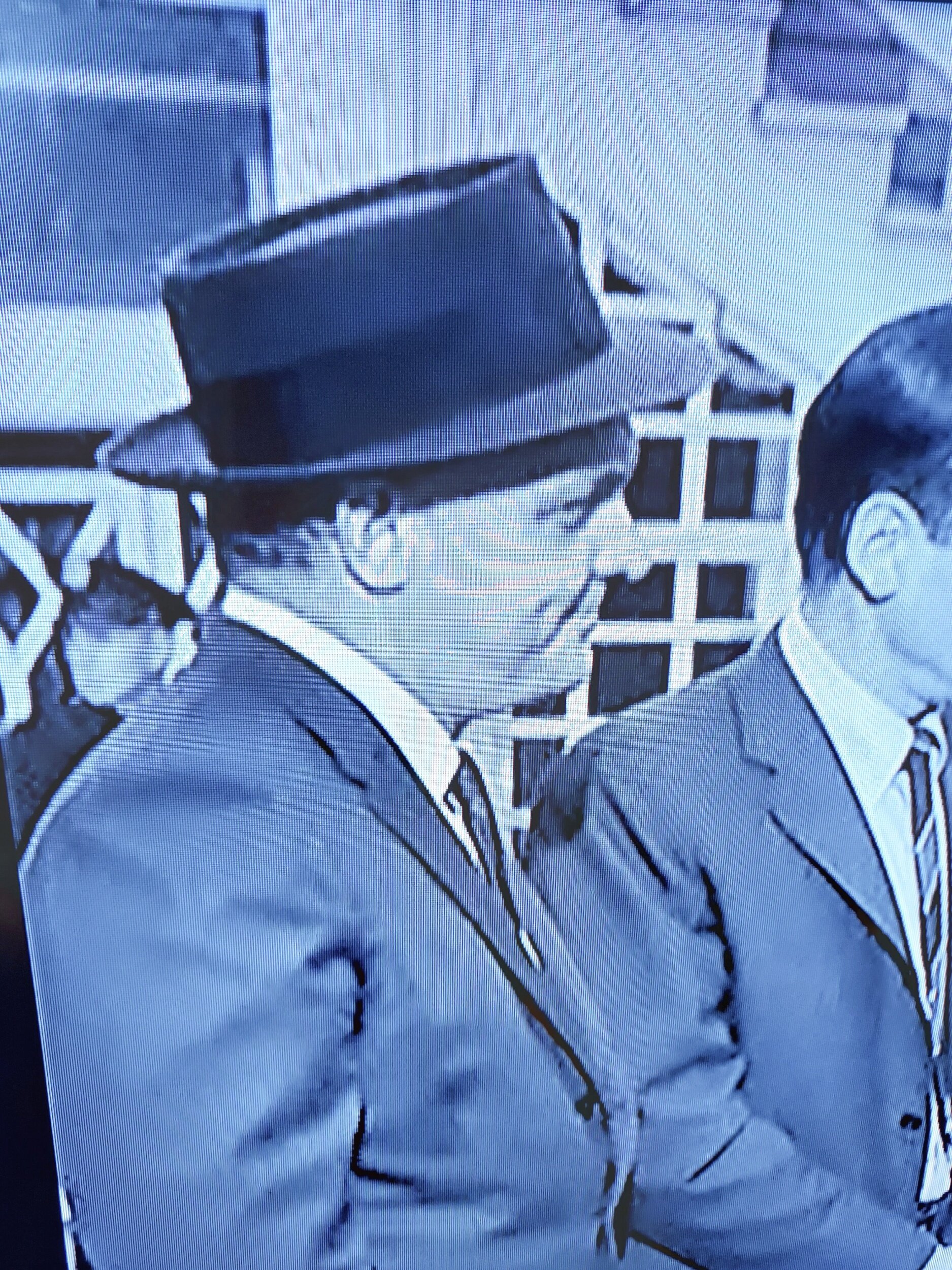
However I'm thinking now of the characters and actors that you don’t see, or barely see. One such character for me is actor Lee Miller (not Jonny Lee Miller from Trainspotting, the other one), who appeared for many years on the original Perry Mason TV show.
He was always with Lt. Tragg, or Lts. Anderson or Drumm, a plainclothes cop who almost always wore a hat and was forever in the background, or off to the side. He had few lines and it’s difficult to get a good look at him because he's usually standing in the doorway, seen in profile or a noir-ish figure in the margins of a scene. On the rare occasions when he does have a line of dialog, his voice rings clearly and deliberately, and the one time I ever remember seeing him on the stand as a witness, he was most engaging.
Why I find him so fascinating, I don’t know. Unless it’s simply that writer's tendency to wonder about people, to imagine what their lives must be like in their off-time. Does Sergeant Brice go to bars after hours? Have a wife and kids? Watch baseball on TV? Have some off-the-wall fetish that would shock his colleagues in the department? Judging from the spark in his eye, he could easily have a secret life. Maybe he dates a glamorous chanteuse from a swanky nightclub downtown. Still, even when he’s told to go clear the hallway or retrieve what could be a piece of evidence, like a glove or a broken piece of glass or a handkerchief, he sets off with purpose and conviction. He’s a guy some might call a typical flatfoot, and it would bounce off without leaving a trace, because his unswerving sense of duty trumps such petty name calling.
According to imdb.com, Miller was Raymond Burr's stand-in for many years. His presence on the show goes beyond his performance onscreen. Even if he was in the margins, he stood in the star's space behind the scenes, so perhaps the reverberations from Burr's steady and compelling portrayal of the world's greatest (fictional) lawyer accompanied Miller to his marks in the edges.

Random holes in walls
cracked tile
a tricky remote control so leave it on the channel where favorite show will be on an hour from now
otherwise lost in home shopping hell of endless infomercials
missing boards on dresser and table and
pillow that somehow got soaked
on the sofa
AND YET
tonight this is home
A/C works
remain shipwrecked in king-size bed for days
microfridge and microwave and endless supply of ice
for packing emotions in cooler
for later time when we at last unpack everything
including memories both good and bad if not to fling in the fire to place in storage again
until the next time angels usher us onto the lost highway under a copper moon
To escape in a divine cloak
of invisibilty
NMc

Today’s post marks the return to my comic series “Fretville,” set in the contemporary rural south.


Here’s one of my earliest “What I Learned from Watching . . . “ posts about one of my favorite movies. I’m sharing this as I finish my novel-in-progress, POSER. I plan on adding to this series of blog posts soon, as well as starting a new series—more on that later in the spring. I can honestly say I’ve watched this film countless times, because I can’t even count how many times I’ve watched it, especially with my past film classes, and I always love to to hear students’ reactions to it. What do you think about Joe Gillis as a character? I’d love to read your reaction in the comments!
Dir. Billy Wilder 1950
One of my favorite films of all time is Sunset Boulevard, a true Hollywood noir in every sense of those words, with many motifs and archetypes associated with the mood of noir in general, but Billy Wilder holds the mirror up to Hollywood so specifically and precisely that it withers at its own reflection, like Norma Desmond (Gloria Swanson) does occasionally when she passes the mirror in the hallway outside her bedroom and realizes that Joe Gillis (William Holden), her live-in lover, might have seen her not looking her best. It’s said that Louis B. Mayer rebuked Billy Wilder outside the theatre after watching Sunset Boulevard because Mayer saw it as a scathing indictment of the very town that had been so good to Wilder. Wilder’s attempt to show the backstage/ back-lot heartbreak, raging ego and youthful ambition corrupted hit so close to home that fact and fiction met and passed each other, placing this film at the crossroads of myth and reality.
When I see this film I become transfixed by so many things in it that, taken as a whole, fill the screen with their Baroque grandeur, but here are three things I’ve learned from watching it.
1. Get it in writing.
At the beginning, Joe Gillis’s ambition has carried him pretty far for a young man who one day up and left his newspaper job in Dayton, Ohio and took off for Hollywood. He has an agent and “a few B-pictures to his credit,” but real success, the kind that consistently pays the rent and keeps the repo men at bay has eluded him. When he lands at Norma Desmond’s mansion because of a blown tire he thinks his charm and cleverness are enough to dig him out of his situation when he agrees to rewrite Norma’s mess of a script for what he expects will be a lucrative fee. Norma chafes at any mention of money however and as Joe works on the script, thinking the money will come if he keeps up his feigned interest in it and Norma long enough, he becomes entangled in Norma’s scheme instead, having to depend on her for cigarette money. He watches his car get towed away because somehow that big check he thought he’d get is never coming. He lives well, but only at Norma’s largesse and with little to no independence. Norma’s mansion at 10086 Sunset Boulevard becomes Joe’s own Hotel California, where there’s always pink champagne on ice and “you can check out but you can never leave.” There’s no contract, no rules, and as Joe discovers when he reveals his truth and tries to leave, no way out.
2. Truth is stranger than fiction, but fiction produces its own truth.
One of the most mind-blowing things about Sunset Boulevard is how closely it mirrors the real-life associations of two of its stars, Gloria Swanson and Erich von Stroheim, who plays Max, Norma’s butler. Erich von Stroheim started his career in Hollywood playing a chauffeur, and later became famous as “the man you love to hate” portraying ruthless German soldiers in several World War I propaganda films. He then went on to direct and act in the first million dollar blockbuster, Foolish Wives, for Universal. It was then that someone from the publicity department began spelling his name “von $troheim” when the film went far over budget, giving him a reputation for profligate spending that would follow him long after. Even von Stroheim’s nemesis, Irving Thalberg, who would later fire him from Universal acknowledged his genius as a director. Von Stroheim proceeded to be fired by every major studio in the ensuing years for his uncompromising commitment to detail and for frequent run-ins with studio executives. The final time he was fired was by none other than Gloria Swanson herself, from Gloria Productions, hers and Joseph P. Kennedy’s production company, during an early morning shoot for a film Von Stroheim had written for Swanson, Queen Kelly. There had been tension on the set but the final straw was reportedly when Von Stroheim wanted her to let co-star Tully Marshall drool tobacco juice onto her hand when he kissed it in a scene. The hour was early, Swanson wasn’t feeling well, and, disgusted, she fired von Stroheim and then Kennedy fired him over the phone as well. “Von,” as he was often called, was just as disgusted at the idea of returning to Hollywood years later to work with Swanson on Sunset Boulevard, playing the woman’s butler, of all things, but his mistress, Denise Vernac, persuaded him that this would be an important picture and that he should be a part of it. In the film, the scene in the garage where von Stroheim as Max, Norma’s butler, reveals the truth about his past relationship with Norma is as shocking as it is heartbreaking, all the more because of the history the real life players share.
Still, Max gets the last word when he directs Norma, who is in a very deluded and vulnerable state, down “the staircase of the palace” near the end. His pose between the two cameras is vintage Von Stroheim, powerful and in control, a glimpse of what he really wanted to be remembered for, his directing. In this scene, Max, creator and guardian of Norma’s myth, is in charge, shedding the role of butler for that once again of auteur.
3. Tell it like it is—if you can handle the consequences.
As many times as I’ve seen this film, I never cease to wish the ending could be different, though in the high noir tradition, there can’t be a happy ending. Joe followed his heart to come to Hollywood to pursue his dream and became entangled with Norma too soon after he’d met Betty Schaefer (Nancy Olsen) who could have been his soul mate. Betty had become involved with Artie (Jack Webb), her assistant director boyfriend (and friend of Joe’s) before she met Joe, and she and Artie become engaged during the course of the story. It’s clear however, that if Betty were to truly follow her heart she’d leave Artie for Joe, and that Joe falls in love with Betty but is torn by the loyalty he feels toward Artie. It’s because of Joe’s sense of decency that he runs Betty out of Norma’s mansion that last night, and turns to meet his fate. He seeks to atone for his actions that have brought him to where he is, sacrifices his dream of success and even happiness so that Betty and Artie can go forward untainted by his choices. He tells Betty to go with Artie and be happy, but Betty truly loves Joe, not Artie, not anymore. She denies having heard a word Joe has said, denies even being in that house to hear his confession, letting him know that she’s willing to walk away from all this if he’ll just leave it behind and come with her. He sends her away anyway.
Is Joe’s chivalrous attempt to shield Betty from his earlier choices the right thing to do when Betty has already acknowledged that she knows what’s going on and loves Joe anyway, that Joe does deserve a second chance? Does he? I believe he does. It’s too bad for Artie but Betty says she’ll always love Artie, she’s just not in love with him anymore, which doesn’t bode well for that marriage. As for Norma, Joe refuses to shield Norma from harsh reality any longer and forces her to face the truth that sends her over the edge. He may have been guilty of trying to manipulate Norma at first, but since then Norma has twisted the genuine concern Joe came to feel for her into something quite warped, and for that she no longer deserves to be shielded; those around her have done it for too long and it has not served her well.
Joe’s attempt to right things at the end of Sunset Boulevard goes wrong in many ways but he cared about all involved enough to try and set things straight before catching the bus back to Dayton. Joe made mistakes but if it was his sense of decency that in the end caused his death (which starts the movie, by the way—no spoiler here!), Joe wanted to end by telling everyone the truth, for as we all know, the truth will set you free. It can also get you shot, fired, burned at the stake, crucified, exiled, and shunned. Joe knew this, too and did it anyway. Perhaps that’s why in his voiceover that both begins and ends the film, there’s not a hint of regret or irony in his voice, only continuing sympathy for Norma, former child star and beloved ingénue transformed and not for the better by the factory that is Hollywood, a sentiment echoed by none other than Cecil B. DeMille earlier in the film: “. . . a dozen press agents working overtime can do terrible things to the human spirit.”
Joe may not have achieved his goal in Hollywood but he took a shot at it, came so close, and could have made it big – if only.
No matter, to me he will always be the screenwriter’s patron saint.

Gates of Hell sculpture at Stanford. A pivotal scene from Poser takes place near here.
Yes, it's been a minute since I've posted here. I last posted during NaNoWriMo. I made my 50,000 word count by the deadline but now I'm working to finish the entire novel by the end of this month. More here soon about progress on Poser, and bits and pieces of inspiration that help me long the way.

I few years ago I started a series of blog posts about my favorite films called “What I Learned From Watching . . . “ Several of these I’ve seen more times than I can count through many years of teaching screenwriting and film studies. I’ve also spent many hours discussing them with my classes, and reading about them. As I’m re-launching my blog and prepping some new film classes to offer online, I wanted to share with you some of my past posts, with some new insights, and I’ll also be posting about some new favorites here at the Backstage Blog,
These posts aren’t really meant to be full-fledged pieces of film criticism (though I do enjoy reading honest-to-gosh film criticism!), but very personal observations based on my own experience of these films and how certain things about them or ideas they contain have engaged/ empowered/ inspired/ affected me over time.
Feel free to comment, and share your own observations and lessons you’ve learned from these and other films!
Bonnie and Clyde
Dir. Arthur Penn, 1967
1. Don’t park the getaway car.
After making C.W. Moss a member of their gang as go-to mechanic and wheel man, Bonnie and Clyde get out to rob a small town bank. C.W. makes the mistake of parallel parking the car while he waits for them to come out and when they do they can’t find him or the car and are caught out in the middle of a busy street with bank alarms going off and people are pointing, yelling and running after them as they scan the area for C.W.. As he struggles to get out of the tight parking space, knocking into other parked cars and further drawing attention to the situation, things escalate, and by the time Bonnie and Clyde finally do get into the car, one of the bank workers is hanging onto the side of the car, threatening to get them. Clyde, cornered, shoots the man in the face. Blood spatters in one of the more shockingly violent scenes for its time, and Clyde goes from bank robber to murderer in one split second. He’s devastated at the turn of events and berates C.W. in the next scene as they hide out in a movie theatre during the “We’re in the Money” number from Gold Diggers of 1933 while Bonnie momentarily escapes into the fantasy of the Busby Berkeley number and C. W. weeps quietly in shame.
C.W. turns out to be a valued member of the Barrow gang, but his inexperience upped their value as wanted criminals considerably and led to an innocent man’s death.
In today’s world, if you’re not a bank robber, the lesson here can be that lack of experience doesn’t mean a person isn’t qualified but they can’t read your mind either and will need some direction to function properly in your organization, especially in potentially touchy situations, until they learn the ropes.
2. Learn to stay focused in the midst of chaos.
In spite of his penchant for stealing, Clyde’s general affability makes him a likable character in the film, though not the brightest. If he hadn’t turned to a life of crime he’d be just another good ole boy. Earlier in the film, he gets nervous right before robbing banks but as he becomes more hardened he acquires nerves of steel which seem to serve him well in his profession.
After one of the most harrowing scenes wherein Bonnie, C.W., Clyde’s brother Buck and sister-in-law Blanche are ambushed by “the Laws” in an armored car and Buck is badly injured, Clyde is at the wheel, driving with a laser-like focus even as the screaming, crying and confusion ebb and flow all around him. Not as susceptible to panic as he might have been earlier, he stares straight ahead, unemotional. A rock.
During times of confusion and imminent melt-down, I often think of Clyde’s unswerving focus during this scene, his ability to shut it all out, hands on the wheel, eyes on the road, going forward—only going forward. Sometimes that kind of concentration is the only thing standing between you and total disaster.
3. People can change in big ways, but that doesn’t mean they will.
Near the end of the film, as Bonnie and Clyde are lying in bed, Bonnie asks Clyde what he would do if they could start fresh, clean, in a brand new place. At first one could interpret his expression as one of joy at the thought that it could ever be possible: the idea of a clean slate. Bonnie awaits his answer, a smile on her face. Clyde says that first of all, they wouldn’t pull their bank jobs in the same state where they live, but would go to other states before returning home to live their normal lives. Bonnie closes her eyes in resignation, without a word.
Bonnie and Clyde do love each other, but with Clyde’s answer Bonnie realizes that he is who he is and that’s who he’ll always be.
Their fate is sealed, and the words that conclude her own poem about them will come true: “Someday they’ll go down together; they’ll bury them side by side. For some it’ll be grief, for the Law a relief, but it’s death for Bonnie and Clyde.”
My fascination with this film goes deep, so I’ll likely be writing more about it in the future, as well as taking a closer look at some newer cinematic interpretations of Bonnie & Clyde’s story.
If you’d like to see more about this and other film & pop culture discussions, sign up for my email list here.
The new vampire comedy, What We Do in the Shadows on FX, is getting rave reviews for its first season. with very good reason. It transcends all the genres from which it descends: comedy, horror, reality show spoof. It’s based on the film of the same name, created by Jemaine Clement and Takai Waititi. I haven’t seen the movie yet and you don’t have to have first seen the movie to love the show enough to watch each episode over and over. Whacky and raucous as it is, Shadows touches on deeper truths about modern life than one may anticipate at first glance.
In case you haven’t seen it, What We Do in the Shadows is the story of three vampires, their human familiar, and one energy vampire living in a big house in Staten Island, New York (as in The Real World). They’re constantly being filmed by a camera crew which is always off-screen, and frequently address the camera and us, the audience, directly (as in The Office). Nandor the Relentless (Kayvan Novak) is the head of the household and rightly so, Nandor being the closest approximation to the historical Vlad the Impaler upon whom Bram Stoker’s Dracula is loosely based.
Nandor has old world charm, a slightly superior attitude, and a soft voice that belies his impressive stature. His human familiar, Guiermo (Harvey Guillen) is constantly on call to attend to all Nandor’s needs, wants, whims, and orders. Guiermo has been in Nandor’s service for ten years and though he is loyal, kind and obedient, never gets the consideration he deserves from Nandor.
In the pilot episode we learn that it’s Guiermo’s ten year anniversary and that his dearest held wish is to become a vampire like Armand in Interview with a Vampire, the first Hispanic vampire Guiermo ever encountered in popular culture and Guiermo’s inspiration: “If he can do it, so can I.” Alas, Gueirmo’s dream is not to come true, not yet anyway, and so as his “work anniversary” present he must settle for a glitter portrait of himself with his master, to decorate his “depressing” room under the stairs.
The other vampires in the house include Laszlo Cravensworth (Matt Berry) and his wife, Nadja (Natasia Demetriou). Nadja is Laszlo’s maker and so an older, more experienced vampire, though both are tremendously experienced in matters of love, sex, and depravity, and speak of these matters openly, freely, and frequently. Laszlo is devoted to Nadje and not immune to getting jealous when she disappears unexpectedly for one of her solitary outings, or during her fond reminiscences of wild sex and intense flirting with the ancient Baron, and Simon the Devious, respectively. Nadje is devoted to Lazslo as well, but appears unfazed by his solitary outings, his own reminiscences of wild sex with the Baron, and his naughty hobbies. They may be an “old” married couple, but both are lusty, sexy and always up for something wild.
The last resident in the house is Colin Robinson (Mark Proksch), a seemingly mild-mannered factotum whose bland exterior hides a raving energy vampire that even the real vampires try their best to avoid. Collin feeds on boredom, distress and anxiety of all kinds, and actually induces these things in others so that he might feed. He lives in the basement of the house when he’s not hovering around the cubicles at his office, preying on coworkers, psychically draining them to the point they can barely sit upright.
Most of what makes this show so much fun to watch, re-watch and re-re-watch is the writing and acting. The dialogue sparkles and things move so quickly one can’t help but want to watch it again to catch the gems that slip through the net the first time. The actors are extremely appealing, each with impeccable comic timing. The show is a feast for the senses, from its beguiling theme song to its rich set design, costumes and make-up. The razor-sharp, off-beat humor throughout sets the show apart from other half-hour comedies. Often the characters find themselves in Larry David-worthy awkward situations that look impossible. Sometimes the outcome is explosive and other such moments end with a furtive glance at the camera, indicating that this isn’t over.
Now that I’ve been watching the show for several weeks, here are some takeaways:
1. The case of Guiermo’s desire for some measure of respect from those he serves with such unselfish devotion, comes up again and again, an unfulfilled wish that could have far-reaching consequences if it continues, as it’s bound to next season. As the vampires’ only link between their world and that of the day-walkers, Guiermo doesn’t ask for much and doesn’t get much. His acceptance of the status quo is getting tenuous the more his hopes for some modicum of appreciation are dashed. There are ominous hints here and there of what could happen if Guiermo ever goes rogue (ie, gets pissed off and decides he’s not going to take it anymore). Guiermo is human, which at times is a liability living among the undead, but it’s a powerful asset in the daylight, which has the power to reduce even the most ancient and powerful vampire to ashes (just ask the Baron—foreshadowing, perhaps? Perhaps not.)
Lesson: You have more power than you think, even over vampires.
2. Laszlo is from England, with a noble background and a loud, confident voice even when he says things that are quite insane. He takes shit from no one, as it were, and any unfortunate soul who deigns to mouth off at Lazslo when he is out walking in the park at night seeking victims had best beware. A bit clumsy at times, Lazslo is lightning fast, and even the best conditioned day-walker can’t outrun Laszlo when he’s in his element. Laslo is occasionally willing to “dress down” in his archaic finery, but never plays small—he wouldn’t know how. Lazslo is an unnatural force of nature, prizes primacy over recency and is clearly no slave to technology nor the bland conventions of modern life.
Lesson: Whatever you have to say, do it with conviction. If you want to want to wear your Victorian outfit and top hat in the park at night, do it with swagger. And dare anyone to say a %^$* word.
3. Nadja is from humble beginnings; her ancestors are Roma (Gypsy), and she knows the pain of being treated as less-than, which explains her sympathy for the underdog. A college student named Jenna caught Nadja’s attention one evening as the trio of actual vampires hovered outside the upstairs window of one of Jenna’s fellow LARPer’s (Live Action Role Playing) apartments. Nadja remains after the others have gone, sadly observing Jenna’s mistreatment at the hands of one of the more bullying LARPers, shunned and excluded by the group as the ringleader influences the others against Jenna. Jenna accepts this all with good humor, unaware that Nadja watches outside. Nadja befriends Jenna afterwards as she walks home through the park, with promises to empower Jenna beyond her wildest dreams. Jenna is now on the road to full-blown vampirism, and what that means for her fellow LARPers remains to be seen. I expect the bullying ringleader should watch his back.
Lesson: Be kind to everyone. That person you think is a nerdy wimp might have vampire allies (and vampire superpowers).
4. Nandor the Relentless got his name from being relentless. Nandor, once a powerful warlord, now fixates on small details and won’t let go. For better or worse, Nandor is all too attuned to whether Guiermo shut the door properly, or whether crepe (which he pronounces phonetically, ie, creepy) paper will make the best decorations for the Baron’s welcome party. He used to lead marauding armies, but now he’s vampire master of two streets in Staten Island. Yes, it’s much smaller than the Manhattan territory ruled by Simon the Devious, but Nandor rules these two streets with panache. And besides, before the end of season one, Simon has gone out in a blaze of glory, while Nandor still rules – those two streets – which makes him the winner.
Lesson: When you’re trying to get a straight answer from someone who’s giving you the double-talk and being slippery as an eel, don’t let them off the hook. Think of Nandor -- and be relentless.
5. Colin is practically a professional practitioner of shadenfreude, but nearly met his match when he starting working with, and then dating, Evie, an emotional vampire. For the first time, Colin got a taste of his own medicine. Evie’s toxic neediness so shamelessly sucked unsuspecting coworkers into her vortex of misery that it took the wind out of Colin’s sails when he tried to apply his own energy-sapping methods. The office nor the relationship was big enough for both of them so Colin broke up with Evie, and Evie didn’t skip a beat. Her constant teasing of Colin as he walked away only strengthened his resolve that the break-up was inevitable, but when he turned back that last time there was the faintest smile on his face, as if he had to admire her soul-sucking brilliance.
Lesson: Whatever is it you’re determined to do, do it well.Even your rivals will respect you for it.
What We Do in the Shadows is rollicking good fun--Wait, that sounded a bit like Laszlo. Is “rollicking” getting to be an archaic term? It’s okay if it is—one more thing I love about this show is that the characters aren’t afraid of being old-fashioned or “out-of-date.” When you’ve been around for millennia or at least centuries (for those vampire whipper-snappers out there), you get to embrace the whole of your experience. If you’ve been watching for the first season, I join you in celebrating that there’ll be another, and if you’re just now jumping on board, you have much to look forward to. It’s definitely worth a bite of your time!
I do a series of paintings called “Life Force” paintings, so far featuring animals: fish, a shark, a turtle, rabbit. and lizards. There are more animals that I want to feature soon, and I have a feeling there will be some Life Force Plant paintings this summer as well. Since all living things emanate a life force, I show that energy in my paintings as different colors around that subject to make the life force visible.
Here’s a link to one of my koi paintings featured this month in the Carp Work Gallery in Spank the Carp: Journal of Fiction and Poetry. This is a bit different from some of my others because this lucky black koi is giving off shades of red, gold and silver. I painted this around the time of the Chinese New Year and wanted to show it giving off abundant good luck and powerful good vibes for the Lunar New Year.
We’re almost halfway through this year as summer arrives but the summer season signals its own new beginnings and possibilities. I’m excited about several of my upcoming projects and look forward to sharing them. Here’s sending abundant good luck and powerful good vibes your way as you approach your art with joy and excitement!